A mehndi design adds beauty to hands and feet. It also carries meaning. People wear it for weddings, festivals, and family events. Some choose it for fun on weekends too. Mehndi feels personal. It tells a small story through lines, dots, and patterns.
In this guide, you will learn popular styles, easy ideas, and practical tips. You will also learn how to care for mehndi so the stain looks dark and lasts longer.
What Is a Mehndi Design?
A mehndi design is a pattern made with henna paste. Henna comes from plant leaves. Artists dry and grind the leaves into powder. Then they mix it with liquid to form a smooth paste. After you apply it, the paste dries on the skin. When you remove it, it leaves an orange stain. Over time, it turns deep brown.
People often connect mehndi with joy and celebration. It also has cultural roots in South Asia, the Middle East, and North Africa. Today, people across the world use it as body art.
Why People Love Mehndi
Mehndi feels special because it blends art and tradition. It looks elegant in photos. It also suits all ages. You can go bold or keep it simple.
Here are a few reasons people choose a mehndi design:
- It looks graceful and festive
- It fits weddings, Eid, Diwali, Karwa Chauth, and parties
- It gives a temporary look with no long-term commitment
- It offers endless styles, from minimal to full coverage
- It feels calming during application
Popular Mehndi Design Styles
Every style has its own mood. Some look classic. Some look modern. You can mix styles too. You can also add small details that match your outfit or jewelry.
1) Arabic Mehndi Design
Arabic patterns look bold and flowing. They often use large flowers, leaves, and vines. They leave more empty space. This makes the design look clean and modern.
People like Arabic mehndi design for these reasons:
- It looks stylish and not too heavy
- It suits beginners
- It dries fast because it has fewer dense fills
- It looks great on both hands and feet
2) Indian Mehndi Design
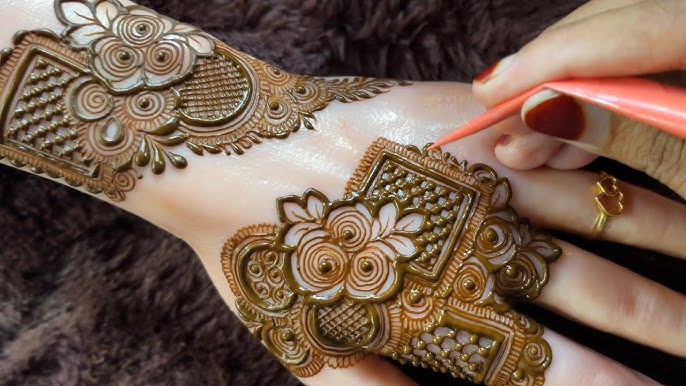
Indian patterns look detailed and dense. They include paisleys, florals, nets, and fine lines. Bridal designs often cover full hands and arms. They may also include symbols like a bride and groom.
An Indian mehndi design works well when you want a rich look. It also looks stunning in close-up photos.
3) Pakistani Mehndi Design
Pakistani designs often blend Arabic flow with Indian detail. Many artists create symmetrical patterns on both hands. They also use fine shading and soft fills.
This mehndi design style fits weddings and formal events. It looks elegant and balanced.
4) Moroccan Mehndi Design
Moroccan patterns use geometric shapes. They use lines, diamonds, and repeats. They can look modern and sharp. Some people prefer this style because it feels different from floral looks.
A Moroccan mehndi design also works well for feet and ankles.
5) Indo-Western Mehndi Design
Indo-Western looks combine traditional motifs with modern shapes. You may see bracelet designs, ring chains, and minimalist grids. Some designs leave large negative space.
This style suits casual events and modern outfits.
Easy Mehndi Design Ideas for Beginners
You do not need complex patterns to look good. A simple mehndi design can look very neat. Clean lines matter more than heavy detail.
Try these beginner-friendly ideas:
- A single flower on the back of the hand
- A vine from the wrist to the finger
- A mandala in the center of the palm
- A bracelet band with small dots
- A finger-only design with rings and lines
- A simple paisley with leaf trails
A quick tip for beginners
Practice on paper first. Then practice on a plastic sheet. When your hand feels steady, apply it to skin.
Bridal Mehndi Design: What Makes It Special?
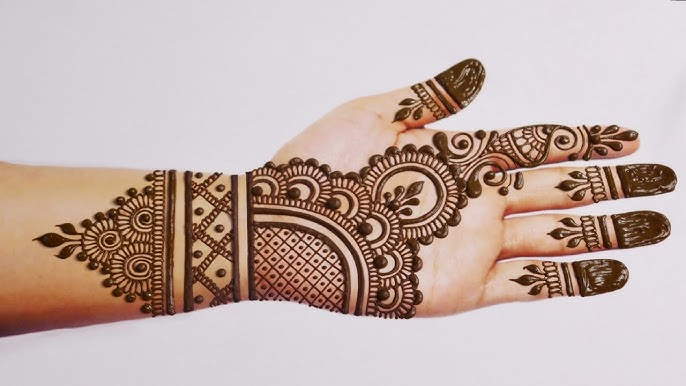
Bridal mehndi often tells a story. It can include names, faces, or wedding symbols. It also uses dense filling. Brides often apply mehndi one to two days before the wedding. They want a dark stain on the big day.
A bridal mehndi design may include:
- Full palm coverage with fine patterns
- Extended designs up to the forearm
- Matching patterns on both hands
- Feet designs that reach the ankles
- Hidden initials of the partner
Bridal design planning tips
- Choose the style early. Save reference images.
- Ask the artist about time. Full bridal mehndi takes hours.
- Wear comfortable clothes during application.
- Keep snacks and water close.
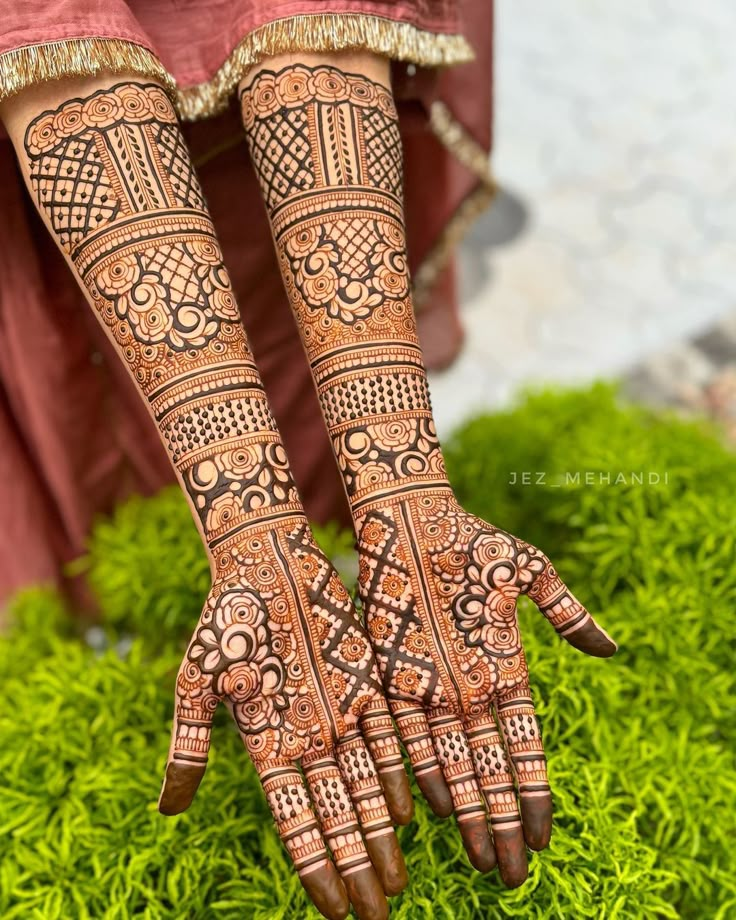
Mehndi Design for Front Hand vs Back Hand
The palm and the back of the hand have different looks. The skin texture also changes the stain and detail.
Front hand (palm) designs
- Look traditional
- Hold dense patterns well
- Often include mandalas, nets, and paisleys
Back hand designs
- Look modern and airy
- Suit floral trails and bracelet patterns
- Pair well with rings and nail art
If you want a balanced look, choose a similar theme for both sides. For example, use floral motifs on both front and back.
Mehndi Design for Feet: Simple and Stylish
Feet mehndi looks great with sandals and open shoes. Many people choose a central motif on the top of the foot. Then they extend it toward toes and ankles.
Easy foot mehndi design ideas include:
- A mandala on the center of the foot
- A vine around the ankle like an anklet
- A toe ring chain with dots
- A side trail from ankle to big toe
Foot skin can stain darker for some people. But it also rubs more due to shoes. So you should plan your footwear after applying.
Minimal Mehndi Design: Clean and Modern
Minimal designs stay popular. They look neat and fashionable. They also suit people who want a quick application.
You can try a minimal mehndi design like:
- Tiny dots along finger joints
- A thin bracelet band at the wrist
- A small lotus near the thumb
- A simple diagonal vine on the back hand
- A half mandala with empty space
Minimal mehndi also works well for office-friendly events.
Festival Mehndi Design Ideas
Festivals call for fun, fast designs. You may want a pattern that looks festive but does not take hours.
Good festival mehndi design options:
- Medium floral trails on both hands
- A mandala with finger fills
- A mix of dots, checks, and leaf patterns
- A quick Arabic pattern with bold outlines
If you apply mehndi at home, choose designs that use fewer tiny details. It reduces mistakes and saves time.
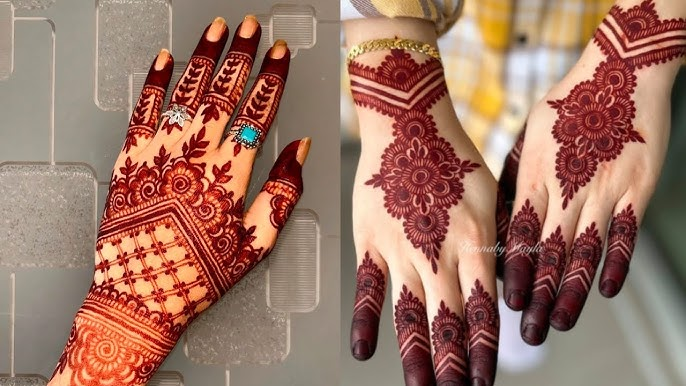
How to Choose the Right Mehndi Design
You can pick a design based on the event, outfit, and time. You can also choose based on how dark you want the stain.
Use this quick checklist:
- Event type: wedding, festival, party, casual
- Time available: 15 minutes, 1 hour, 3 hours
- Style goal: bold, soft, minimal, full coverage
- Outfit details: heavy embroidery, simple dress, modern look
- Comfort level: beginner or experienced
A good mehndi design should match your mood. It should also feel comfortable to wear.
Mehndi Cone Tips: Better Lines, Better Control
Your cone matters a lot. If the paste feels rough, your lines may break. If the cone tip is too wide, details become hard.
Try these practical tips:
- Cut a very small opening at the cone tip
- Test the flow on paper before you start
- Hold the cone like a pencil
- Keep steady pressure for smooth lines
- Clean the tip if paste starts to clog
If you want thin lines, move your hand slowly. Let the paste sit on top of the skin. Do not push it into the skin.
How to Make Mehndi Stain Darker (Simple Steps)
Many people ask how to get a dark stain. The secret lies in good paste, long drying time, and warmth.
Here is what helps a mehndi design stain darker:
- Use fresh henna paste
- Clean your skin before applying
- Keep the paste on for at least 4 to 6 hours
- Avoid water for 12 hours after removal
- Keep hands warm after you remove the paste
Easy aftercare routine
- Scrape off dry paste. Do not wash it off.
- Apply a little natural oil (like coconut or olive).
- Avoid soap and water as long as you can.
- Keep your hands warm and relaxed.
Warmth helps the stain deepen. Cold air can slow it down.
Common Mehndi Mistakes and How to Avoid Them
Even good artists make small mistakes. You can still fix most issues if you notice them early.
Mistake 1: Watery paste
Watery paste spreads and blurs. Use thick paste for sharp lines.
Mistake 2: Rushing the drying stage
If you touch the design too soon, it smudges. Sit still. Let it dry fully.
Mistake 3: Washing too soon
Water can lighten the stain. Wait as long as you can.
Mistake 4: Using old cones
Old cones lose dye strength. Choose fresh cones for best results.
A neat mehndi design depends on patience more than speed.
Mehndi Design Trends People Ask For Right Now
Trends change, but some ideas stay popular. Many people want a mix of traditional and modern.
Current trend ideas:
- Jewelry-style mehndi with chains and charms
- Big florals with soft shading
- Finger highlight designs with empty palms
- Anklet and toe ring patterns for feet
- Name or initial hidden inside patterns
You can bring reference photos to your artist. You can also ask for a custom mehndi design based on your outfit.
FAQs About Mehndi Design
How long does mehndi last?
A mehndi design often lasts 7 to 14 days. It depends on your skin, aftercare, and how often you wash your hands.
When does the color get darkest?
The stain often gets darkest after 24 to 48 hours. It starts orange and then deepens.
Can I apply mehndi on sensitive skin?
Some people have sensitive skin. Natural henna usually feels safe, but you should patch test first. Avoid “black henna” products. They may contain strong chemicals.
Can I sleep with mehndi on?
Yes, many people do. Wrap your hand lightly with tissue or breathable cloth once it dries. It helps protect the mehndi design from smudging.
Final Thoughts: Pick a Mehndi Design That Feels Like You
A mehndi design can look simple or grand. Both can feel beautiful. The best design matches your comfort, your event, and your style. Start with easy patterns if you are new. Go detailed when you want a bold look.
If you want, tell me:
- the event (wedding, Eid, party, casual),
- front hand or back hand,
- simple or heavy,
and I’ll write 10 ready-to-use mehndi design ideas with descriptions you can hand to an artist.